A guide to choosing blades and rubbers
A guide to choosing blades and rubbers
Many players first think about which rubber to use: more spin, more speed, more “feel”. Just as important, however, is the blade the rubber is mounted on. One crucial point is almost always overlooked: a flexible blade supports learning, while an overly soft rubber does the opposite.
A more flexible blade increases ball contact time, enlarges the safety arc over the net, and gives you more time to “feel” the ball. A very soft rubber, on the other hand, produces a strong catapult effect, dampens the contact, and distorts feedback. The result feels pleasant at first, but you actually learn less.
In this article, we explain how blade and rubber interact, why a flexible blade makes sense while very soft rubbers do not, and how to find the right combination for your game using RESONANT blades and Etika Pro rubbers.
Blade and rubber: who does what?
In simple terms, the blade defines the fundamental characteristics of your setup. It determines the base speed, bending stiffness (measured via frequency in Hz), vibration behavior and therefore the feedback you feel in your hand, as well as stability in blocking and passive play.
The rubber, by contrast, plays a different role. It largely influences spin potential, catapult effect, touch in the short game, and dynamics in topspin and opening strokes.
The blade is the instrument, the rubber is the string. Only together do they create your playing feel.
The blade is the instrument, the rubber is the string.
Too-soft rubbers: why they don’t help
Very soft rubbers (approximately 38° to 42°, for example classic “soft” rubbers) feel pleasant at first. They:
- compress strongly
- generate a lot of catapult
- dampen the contact
- make the ball “jump” even with minimal effort
The problem:
- the rubber does too much of the work
- errors in racket angle and timing are masked
- the perceived “feel” is actually just damping
- you receive less real information about your stroke
In short: flex in the blade enhances feedback, while soft catapult in the rubber obscures it. That’s why RESONANT deliberately focuses on medium-hard and hard rubbers instead of “Super-Soft.”
Overly soft rubbers don’t provide real feel, only damping.
Why we use 47° and 51°, but no soft rubbers
Very soft rubbers (approx. 38° to 42°) offer strong catapult, muted feedback, and pleasant haptics, but little honesty.
Medium-hard rubbers (approx. 45° to 47°) provide stable, clear feedback and good spin even at moderate speed. They are ideal for building technique, learning phases, and controlled offensive players.
Hard rubbers (50° to 52°) deliver direct contact and high stability at high speed. They are ideal once technique and timing are already reliable.
Medium-hard and hard rubbers reward clean technique with stability and precision.
Overview of the four RESONANT blades
OPUS 1 (OFF-)
A classic five-ply blade with Limba and Ayous. High control, soft ball feel, extended contact time. For players of all levels who value control and precision.
PALIS (OFF)
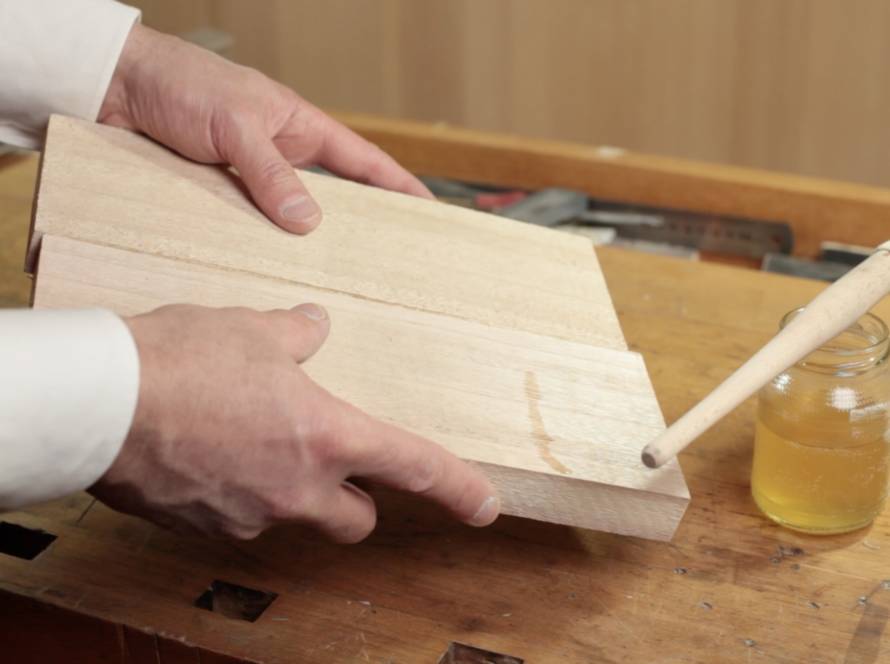
Rosewood outer ply, resonance spruce from Graubünden inside, bonded with hide glue. Lively feedback, excellent spin capability, a dynamic offensive blade for advanced players.
PULSE C (OFF+)
Resonance spruce outer ply, inner carbon layer, kiri core. Very fast, precise, and stable. Designed for technically skilled tournament players, not for casual use.
WAVE C (OFF+)
Koto outer ply, carbon layer, Ayous mid-ply, kiri core. Extremely hard and fast, direct and explosive ball contact. For very experienced offensive players with refined technique.
Practical setup recommendations
Control and spin first
- Player type: allround to controlled offensive play, all leagues
- Blade: OPUS 1 (OFF-)
- Rubbers:
- Etika Pro (47°) on forehand and backhand
or - Etika Pro H (51°) forehand + Etika Pro (47°) backhand if the forehand is very active
- Etika Pro (47°) on forehand and backhand
This setup offers high control, clear spin behavior, and honest, educational feedback.
Modern, variable offensive play
- Player type: advanced club players with active topspin game
- Blade: PALIS (OFF)
- Rubbers:
- Etika Pro H (51°) forehand + Etika Pro (47°) backhand
or - Etika Pro (47°) on both sides if control is more important than maximum speed
- Etika Pro H (51°) forehand + Etika Pro (47°) backhand
This setup suits players who actively control the rhythm, use variable topspins, blocks, and counter-attacks, and value natural resonance.
Maximum power and speed
- Player type: technically strong, aggressive attackers
- Blade: PULSE C (OFF+) or WAVE C (OFF+)
- Rubbers:
- Etika Pro H (51°) on forehand and backhand
or - Etika Pro H (51°) forehand + Etika Pro (47°) backhand for slightly more control
- Etika Pro H (51°) on forehand and backhand
This combination only makes sense for players with refined technique. It offers extreme speed, very short contact times, and highly direct feedback.
Recommendations by playing level (guidelines)
- Club beginners / returning players:
- OPUS 1 (OFF-) + Etika Pro (47°) on forehand and backhand
- Advanced league players (active topspins, good timing):
- PALIS (OFF) + Etika Pro H (51°) forehand / Etika Pro (47°) backhand
or - OPUS 1 (OFF-) + Etika Pro H (51°) forehand / Etika Pro (47°) backhand if more feel is desired
- PALIS (OFF) + Etika Pro H (51°) forehand / Etika Pro (47°) backhand
- Ambitious tournament and professional players:
- PULSE C or WAVE C (OFF+) + Etika Pro H (51°) on forehand and backhand
or - PULSE C or WAVE C (OFF+) + Etika Pro H (51°) forehand / Etika Pro (47°) backhand for added stability
- PULSE C or WAVE C (OFF+) + Etika Pro H (51°) on forehand and backhand
Common misconceptions and how to avoid them
Misconception 1: “Soft rubbers have more feel.”
Subjectively, yes, they feel soft. Objectively, the “feel” comes from damping, not precise feedback. Soft rubbers remove information. They are pleasant, but poor teachers.
Misconception 2: “The faster the blade, the better.”
An OFF+ blade forgives little. Players still working on technique, timing, and racket angle benefit far more from an OFF- or OFF blade paired with a medium-hard rubber.
Misconception 3: “One setup fits all.”
Your playing style, technique, and training frequency matter. That’s why RESONANT deliberately offers a compact but clearly differentiated range of blades and rubbers instead of dozens of minor variations.
There is no setup for everyone, only the right one for your game.
In summary
- A slightly more flexible blade helps you develop technique because it holds the ball longer and provides clearer feedback.
- Very soft rubbers do the opposite: they dampen, catapult, and hide errors.
- Medium-hard and hard rubbers on the right blade deliver what you actually need: honest feedback, controllable dynamics, and clear spin.
FAQ – Choosing blades and Rrubbers
Which setup is ideal if I want to improve control and spin?
OPUS 1 with Etika Pro (47°) on both sides. The blade’s flex and the medium-hard rubber support technical development and spin building.
When does a 51° rubber make sense?
Once your topspins are stable and you can actively apply pressure, especially on the forehand.
Can I play offensively with 47° on the forehand?
Yes. Especially on OPUS 1 or PALIS , Etika Pro (47°) on the forehand is an excellent choice for players who prioritize control and spin over maximum end speed.
Why doesn’t RESONANT offer very soft rubbers?
Because we follow a clear philosophy: honest feedback instead of artificial catapult. Equipment should support your game, not hide mistakes.
Which blade is the most versatile?
OPUS 1. Depending on the rubber choice (47° or 51°), it can be played from highly controlled to clearly offensive.