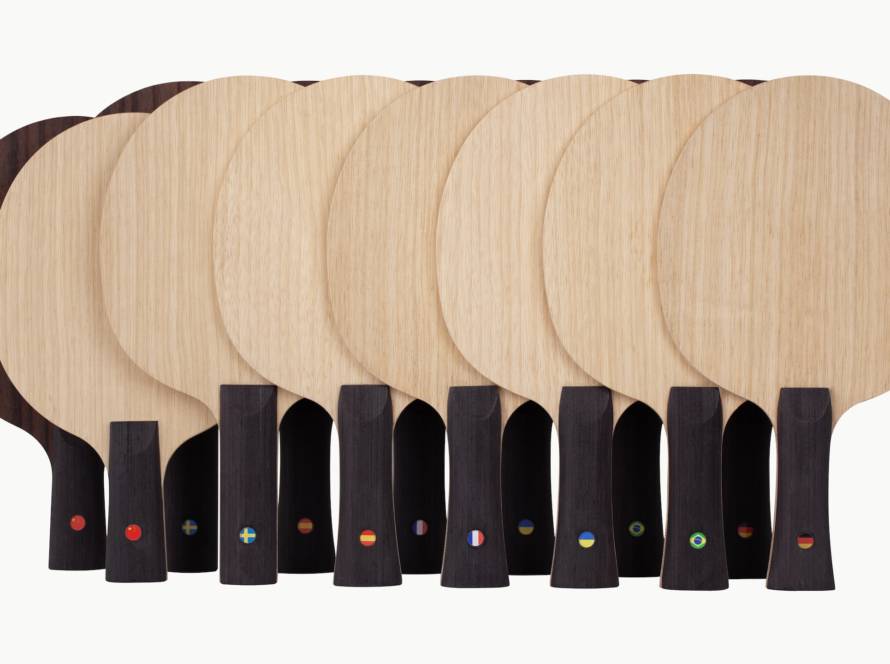
At first glance, a violin and a table tennis blade might seem worlds apart, one a symbol of musical elegance, the other a tool of modern sport. But on closer inspection, there are striking parallels in the choice of materials, construction methods, and the shared pursuit of resonance that connect both worlds.
The Role of Resonance
In violin making, resonance is the soul of the instrument. Sound doesn’t come only from the strings, but from how the violin body absorbs and responds to vibrations. A table tennis blade reacts in a similar way upon ball contact. Vibrations travel through its plies, are absorbed, transferred, or amplified. A player feels the blade quality just as a musician feels the tone of their instrument.
A player feels the blade quality just as a musician feels the tone of their instrument.
Players seeking control, spin, and touch should pay close attention to the resonance and ply composition of their blade.
Wood Selection: Tonewoods as a Shared Element
Spruce from alpine regions, especially slow-grown and even-grained, has been used in violin making for centuries. The same wood is featured in select RESONANT models as a core ply. Why? Because it distributes vibrations evenly, enhances ball contact sensitivity, and offers a natural response.
Spruce distributes vibrations evenly, enhances ball contact sensitivity, and offers a natural response.
Woods like Kiri, Ayous, and Rosewood also contribute unique playing characteristics. For those seeking classic touch and fine control, these materials are often the best choice.
Craftsmanship as a Connection
The use of hide glue is another shared feature. Essential in traditional violin making, this glue also promotes optimal resonance in table tennis blades. It creates a bond that remains alive, breathing, and responsive. No synthetic adhesive can match this behavior.
Blades bonded with hide glue are highly valued among experienced players for their unique feel.
The Human Element
Ultimately, it’s not only about technique but also about trust in one’s equipment. Just like a musician must know their instrument, a player must connect with their blade. Only then does true feeling emerge. To improve your game, you need more than the right rubber, you need the right blade. Because the blade is the heart of your setup and influences speed, control, and feedback more than any other part.
Frequently Asked Questions (FAQ)
Was ist das beste Tischtennisholz für Kontrolle und Gefühl
Woods like Limba, Ayous, or Spruce offer exceptional feel. Blades with classic construction and hide glue are known for their excellent control and rich resonance.
Why does wood type matter in table tennis blades?
The type of wood determines how the blade responds to contact – how much speed, control, and feedback you get. Tonewoods like spruce or rosewood create a particularly harmonious vibration profile.
What does hide glue do in a table tennis blade?
Hide glue bonds the plies organically and preserves the wood’s natural resonance. This results in greater feel and a more responsive connection to the ball.
Are handmade blades better than industrial ones?
Handcrafted blades usually offer finer craftsmanship, better material tuning, and noticeably clearer feedback. Advanced players can tell the difference immediately.
How do I find the right blade for my playing style?
If you prefer a controlled allround or offensive game, look for OFF or OFF- blades with a classic wood composition. For more aggressive, modern players, OFF+ blades with carbon layers may be more suitable.