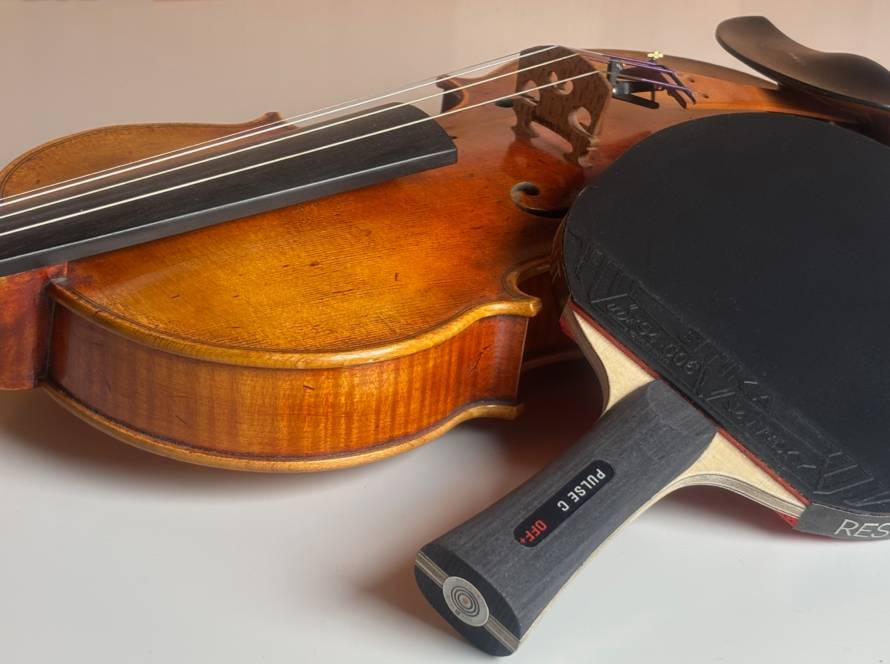
If you’re looking for a new table tennis blade, you’ll quickly notice a wide range of prices, from 30 to over 300 CHF. But what makes the difference? What justifies the price of a handcrafted blade like those from RESONANT? And who is this investment really for?
Material Quality – The Wood Makes the Difference
The type of wood plays a key role in how a blade feels and performs. Cheaper blades often use industrially cut veneers made from standard wood types in mass production. RESONANT, by contrast, uses carefully selected tonewoods like alpine spruce from Graubünden, rosewood, or kiri from sustainable forestry. These woods not only offer superior resonance but are also more stable and durable.
Handcrafted in Switzerland
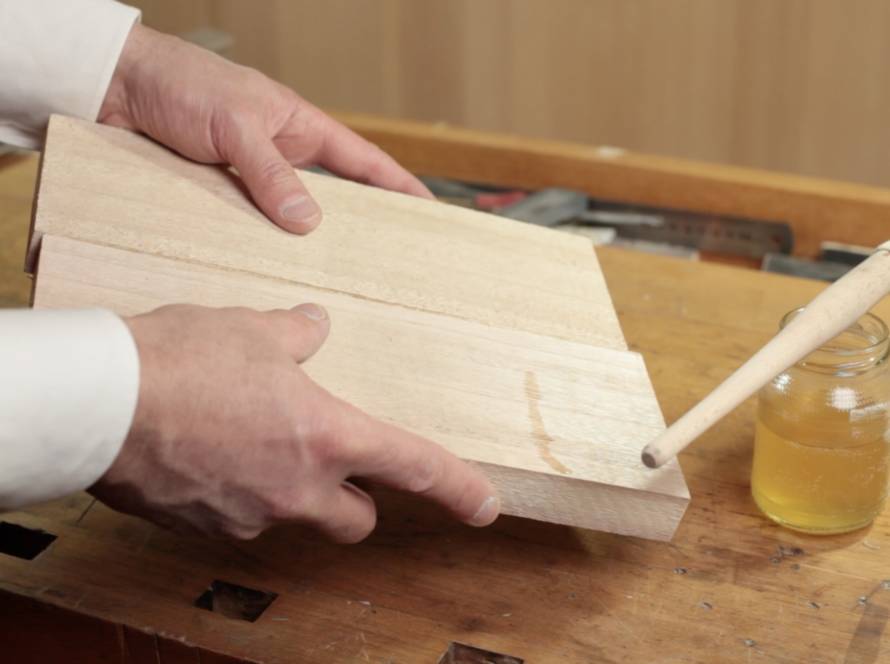
Most mass-produced blades are manufactured automatically in Asia. Handcrafted blades like those from RESONANT are made in Switzerland through many hours of manual work. Every stage, from cutting and gluing with hide glue to the final finish, is carried out with utmost precision. This craftsmanship directly impacts performance and turns every blade into a unique playing instrument.
A great blade is not a mass product. It’s an instrument built for your game.
Traditional Techniques – Hide Glue and Acoustic Bond
Another cost factor is the adhesive. Industrial glues are quick, cheap, and machine-friendly. Hide glue, on the other hand, requires patience and experience. It bonds wood fibers organically and preserves the blade’s resonance. This makes a clear difference for players who value touch and control.
Thermal Wood Treatment for Better Performance
Some RESONANT models can be made with thermally treated wood upon request. This alters vibration properties, improves dimensional stability, and enhances feedback on ball contact. The process is complex – but for serious players, it adds real value.
Industrial Blades – Why Big Brands Aren’t Always Better
Interestingly, many high-end brand-name blades are made using the same industrial processes as cheaper ones. The price difference often stems from global marketing campaigns, professional sponsorships, and international distribution. When you buy such a blade, you’re often paying for the name, not necessarily better quality.
You’re not paying for marketing and sponsorships. You’re investing in a handmade instrument built for your game.
Who Should Consider a Premium Blade?
A high-quality blade is more than a tool. It’s a trusted partner in your game. If you’ve mastered your technique, train regularly, and want to refine your feel for the ball, you’ll notice the difference right away. Even players with smaller hands or unique needs can benefit from a custom-made blade.
A handcrafted blade from Switzerland costs more, but it offers more: precision, durability, and playing feel.
Conclusion – Price vs. Value
A handcrafted table tennis blade from Switzerland costs more, but it delivers more: precision, durability, tonal feedback, and the confidence of playing with a true instrument. If you're serious about improving your game, don’t cut corners on your most important piece of equipment.
FAQ – Table Tennis Blade Prices
Why do some blades cost over 300 CHF?
Because they’re made from rare, high-quality woods, handcrafted in Switzerland, and built with traditional techniques.
Is it worth it for casual players?
If you care about feel, control, and uniqueness, yes. But occasional players might be fine with a simpler model.
How long does a high-quality blade last?
With proper care, many years. In fact, premium blades often age like musical instruments, getting better over time.
Are all RESONANT blades handmade?
Yes. Every model is crafted by hand and tuned for optimal playing performance.
What’s the difference between a 300 CHF blade and an 80 CHF one?
Usually the wood quality, adhesive, craftsmanship, feel, and durability clearly set premium blades apart.