The Best Table Tennis Handle in the World?
A deliberately provocative question. And one we don’t want to answer ourselves.
While woods, fibre-reinforced materials and blade constructions in table tennis have continued to evolve, the basic principle of the handle has remained almost unchanged for decades. So we decided to start right there. Not with a new colour. Not with another variation of a familiar handle shape. But with a different way of building a table tennis handle.
The result is a new RESONANT handle construction that encloses the blade in the handle area. We have filed a patent application for this construction principle.
Why redesign a table tennis handle?
The traditional construction is relatively simple: the blade extends into the handle. Two handle scales are glued to the top and bottom. The handle scales and blade are then shaped together until the desired handle geometry is achieved. It works, and it has been done this way for decades. But it also comes with a structural limitation: the geometry of the handle has to be shaped together with the structure of the blade.
A table tennis blade consists of several layers. These can have different hardnesses and properties. Composite blades also include carbon or other fibre-reinforced materials. With a traditional construction, these layers can be exposed along the sides of the handle. And that is exactly where your hand rests.
We build the handle around the blade
Our new RESONANT system takes a different approach. We don’t simply glue two handle scales onto the blade. We build the handle around the blade.
In the handle area, the handle material encloses the blade structure from the sides as well. As a result, the different layers of the blade are no longer directly exposed along the sides of the handle. At first, this may sound like a small structural change. But when it comes to shaping the handle, it makes a big difference.
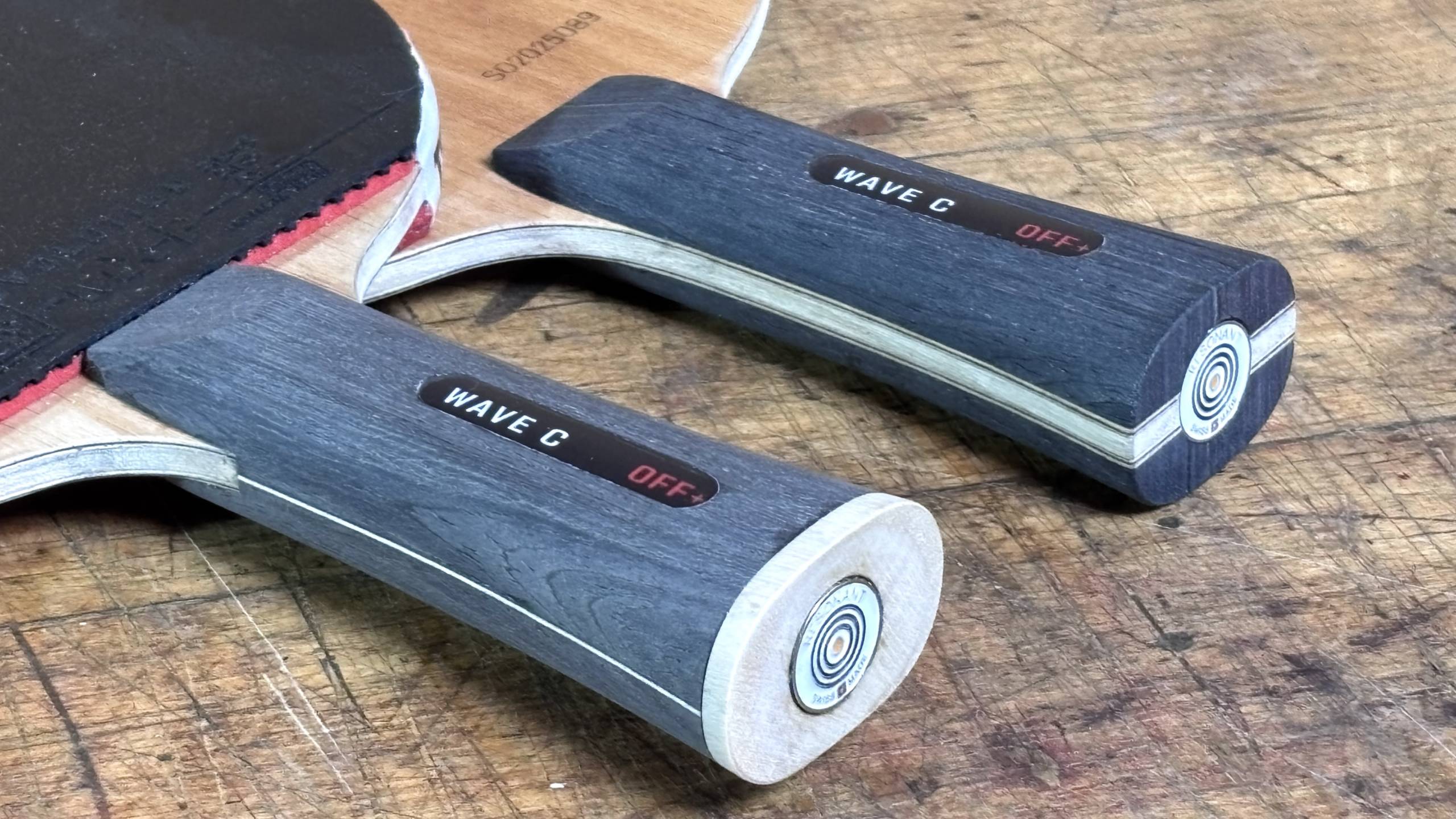
Left: new enclosing handle construction. Right: traditional construction.
A handle we can shape as a handle
This was one of our main goals. With the new construction, we can first define the external geometry we want for the hand. Only then do we determine how the blade is accommodated inside the handle. This gives us much more freedom to shape curves and transitions, regardless of which veneers or composite materials are used in the blade.
The hand rests on a largely continuous surface of the wood selected for the handle, rather than on a sequence of layers with different hardnesses. This allows us to shape the handle very evenly and smoothly. Smooth is actually the word that best describes the feeling we wanted to achieve.
The basic geometry is defined digitally and precisely machined on a CNC. Assembly, shaping and final finishing are then carried out by hand.
Particularly interesting for thicker blades
The new construction also gives us more freedom when working with unusual blade structures. A good example is a thick blade with a balsa core. Balsa is extremely light, but also soft and delicate. With a traditional construction, heavily rounding the handle can expose this soft core material in the handle area.
By enclosing the blade with the handle, we can protect this area while having greater freedom to shape the external handle geometry. This means we can achieve the desired handle shape even with thick or delicate blade constructions.
Not just one handle shape
The concept is not limited to our new flared handle. Using the same construction principle, we can develop flared, straight, anatomical or individually customised handle geometries. The principle can be applied to a wide range of handle shapes.
Our goal is therefore not to develop one handle that is supposed to be perfect for every player. Our goal is to be able to shape a handle for the hand as independently as possible from the construction of the blade itself.
Wood, weight and design, your choice
The new construction also opens up new possibilities for customisation. Different wood species are available for the handle. This allows us to create anything from very simple handles to combinations featuring contrasts, lines and different woods.
But material selection affects more than just appearance. Different woods have different densities and therefore different weights. We can also adjust the internal structure of the handle and deliberately remove more or less material. Within certain limits, this allows us to adjust the weight of the handle and, as a result, the balance of the entire racket..
Wood species, material combinations, weight and design can therefore be adapted to the individual player and the desired feel of the racket. If you would like a customised handle, you can contact us directly. Together, we can define the wood, combination and design.
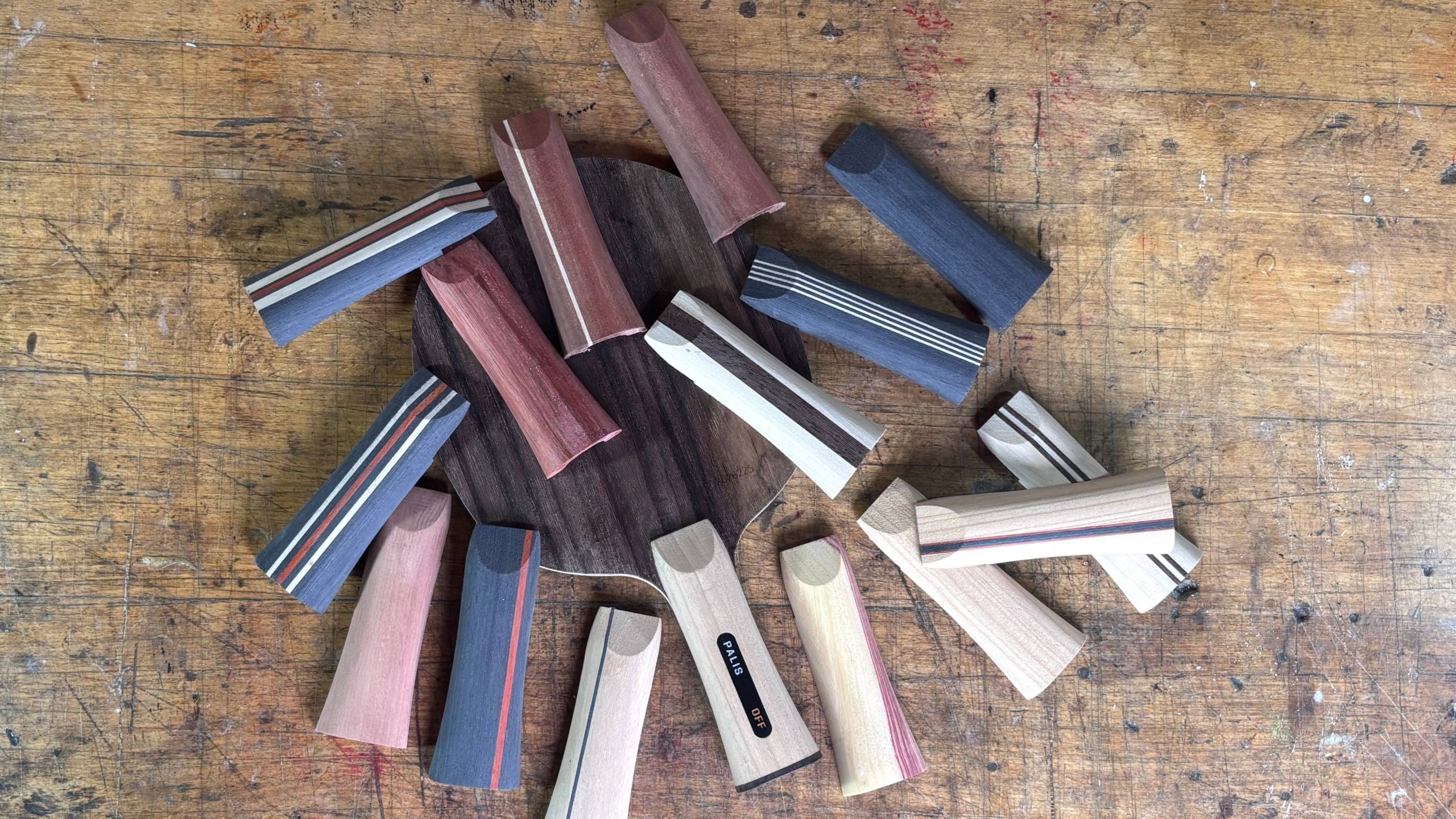
Different woods, different weights, individual designs.
And how does it feel?
In the end, construction, CNC machining and material selection are only means to an end. What matters is how the handle feels in your hand.
The first feedback from competitive players has been very positive. Our new flared handle has been described as particularly natural and comfortable. Some players have even told us that it is the best table tennis handle they have ever played with!
Even more interesting is something we have heard several times: after a short while, you barely notice the handle anymore. Your hand finds its position naturally, without having to think about the handle during play. That is exactly what we wanted to achieve.
We didn’t ask the players whether this was the best table tennis handle in the world. We simply put the racket in their hands.
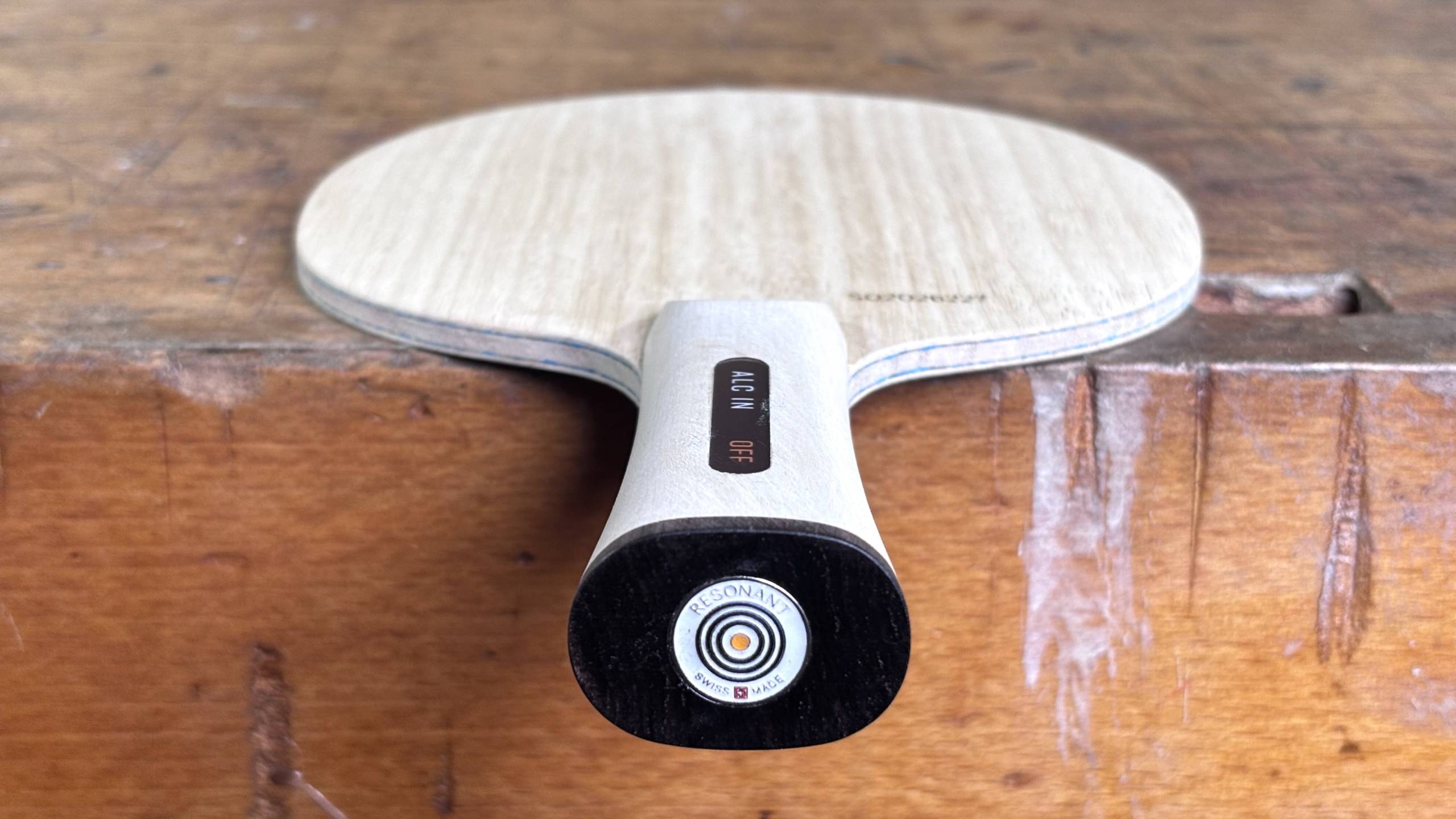
Hornbeam handle with an ebony end cap, one of many possible wood combinations.
Patent pending
We haven’t simply changed the shape of an existing table tennis handle. We have changed the way the handle and blade are structurally connected. We have filed a patent application for this new construction principle. At its core, the handle essentially encloses the blade in the handle area.
Is it the best table tennis handle in the world? We don’t want to decide that for you. Try it. And decide for yourself!
From now on, all RESONANT blades will be made using the new handle construction. Individual wood and design combinations are available on request. For more information, custom requests and prices, send us an email.
Frequently Asked Questions (FAQ)
What makes the new RESONANT handle different from a traditional table tennis handle?
With a traditional construction, two handle scales are glued to the top and bottom of the blade. With the new RESONANT system, the handle also encloses the blade from the sides in the handle area.
What does this mean for the player?
The handle can be shaped from a continuous wood surface and finished very evenly. In traditional handles, layers with different hardnesses meet along the sides and can also wear differently over time. Our construction creates a homogeneous, flowing surface without noticeable transitions.
Is the handle made by hand?
Partly. The basic geometry is precisely machined on a CNC. Assembly, shaping and final finishing are carried out by hand.
May I choose the wood and design of my handle?
Yes. Depending on the model, different wood species with different colours, grain structures and weights can be combined. Contact us directly to discuss individual options and prices.
Is the new handle only available in a flared shape?
No. The construction principle is suitable for flared, straight, anatomical and penhold handles. Custom handle geometries or replicas of a preferred handle are also possible.
Is the new handle patented?
A patent application has been filed for the new construction principle. The system is therefore patent pending..