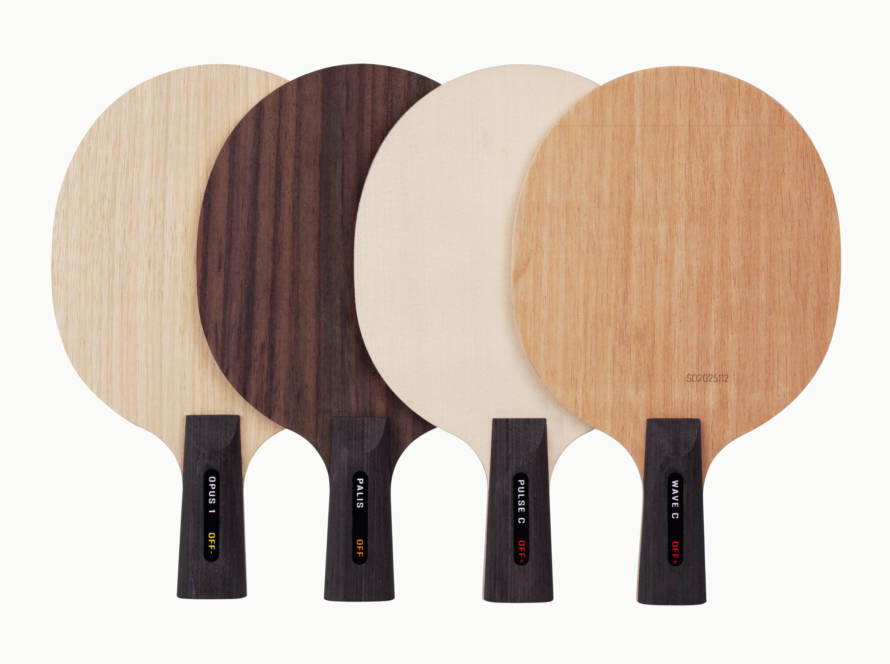
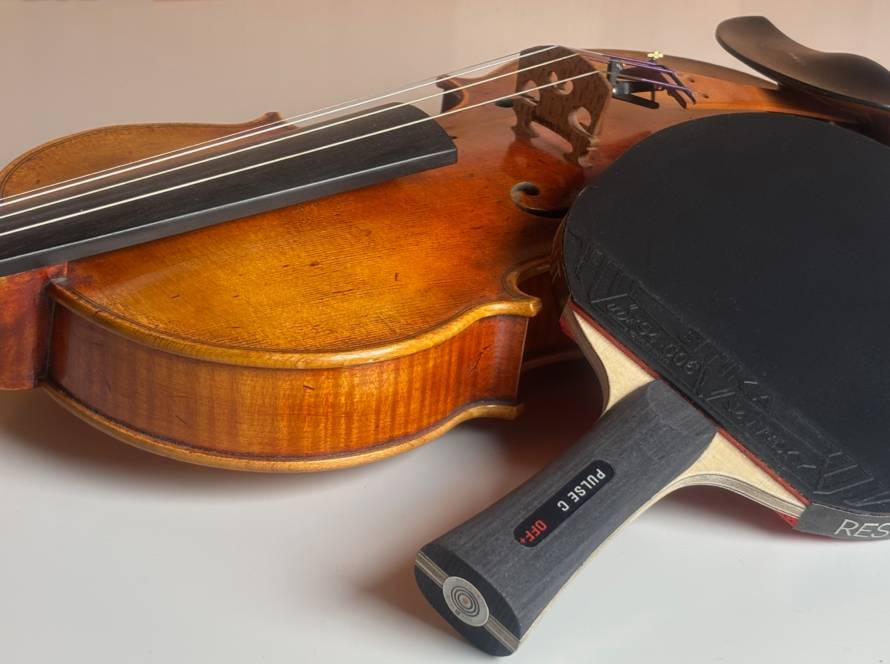
In an era dominated by synthetic adhesives in industrial production, the use of hide glue may seem like a relic from the past. Yet anyone familiar with fine craftsmanship, instrument making, or high-quality table tennis blades will regularly come across this traditional bonding agent. And for good reason.
Origin and Composition
Hide glue is a natural gelatin-based adhesive derived from animal hides. For centuries, it has been used in violin making, furniture restoration, and bookbinding. Its main components are proteins such as collagen, which turn into a water-soluble adhesive when heated.
Why Hide Glue in Table Tennis Blade Making?
Unlike modern synthetic adhesives, hide glue does not form a deeply penetrating, structurally stiffening bond within the wood. Instead, it creates a fine, clearly defined glue line. It bonds the wood surfaces on a microscopic level without penetrating deeply into the cellular structure. The result is not a simple “gluing” process, but a natural “joining” of the materials. This allows the structure to remain permeable to vibrations, contributing to a lively and immediate playing feel.
Not just «glued», but naturally «fused».
Players experience more direct feedback, enhanced control, and refined touch on every ball contact.
Acoustic and Resonance Benefits
Hide glue enhances the natural resonance properties of the wood layers. Just as the body of a violin is traditionally assembled using gelatin glue, this bonding method also contributes to a more harmonious vibration profile in table tennis blades. Hide glue enhances the natural resonance of the blade’s wooden layers. The vibrations travel more organically through the wood, providing the player with a clearer, more resonant feel.
Hide glue enhances the natural resonance of the blade’s wooden layers.
The vibrations travel more organically through the wood, providing the player with a clearer, more resonant feel.
A Craft That Requires Precision
Working with hide glue requires skill and experience. It must be prepared and applied at around 60–70°C, sets quickly, and leaves little room for error. It also takes longer to cure than modern adhesives. These characteristics make it unsuitable for industrial use, but ideal for handcrafted products.
Used for Quarter-Sawn Joints and Small Wood Formats
We also use hide glue in table tennis blades with a semi-quarter-sawn orientation. This construction ensures that the growth rings are as perpendicular as possible to the playing surface, significantly improving structural stability and the uniformity of vibration.
In addition, we use hide glue for longitudinal joints when tonewoods such as kiri or resonance spruce are not available in sufficient width for a single, continuous ply. When executed properly, these longitudinal joints are acoustically neutral and allow for optimal use of selected wood without any compromise in acoustic or playing performance.
More Than Just Glue
Hide glue is not a relic of the past, but an active design choice for premium table tennis blades. Anyone seeking genuine playing feel, natural resonance, and artisan quality is making a deliberate choice with a traditionally bonded blade, a choice for authenticity.
Hide glue is not a relic, it’s a functional component of truly handcrafted table tennis blades.
Frequently Asked Questions (FAQ)
What’s the difference between hide glue and modern adhesives?
Hide glue bonds wood fibers organically, while synthetic glues often create rigid, dampening layers. This makes a noticeable difference in play feel.
Why do so few manufacturers use hide glue?
Because it’s labor-intensive, takes longer to cure, and doesn’t fit mass production. But it’s ideal for handcrafted work.
Does hide glue affect playing feel?
Yes. Many players report a more open, precise response and improved ball feedback, especially with control-oriented blades.
Is hide glue durable?
When properly applied, it’s extremely long-lasting. Many historical instruments and furniture pieces have held together for centuries.
How sustainable is hide glue?
It’s biodegradable, made from by-products, and fully reversible, making it a more eco-friendly alternative to synthetic resins.